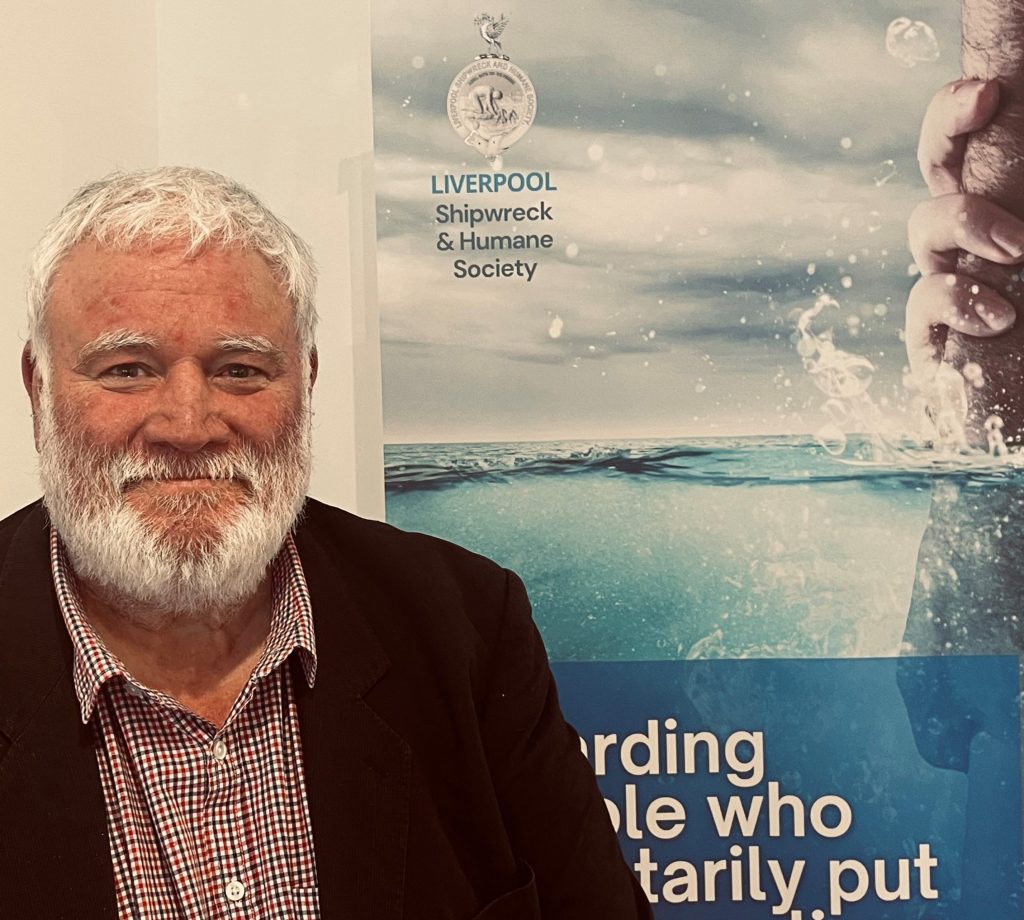
Tony Jones has been a Trustee of Liverpool Shipwreck and Humane Society for more than two decades. Tony takes a keen interest in the history of the Society but also looks at the evolution of the organisation in the modern world and the importance of keeping the Society relevant in the ever-changing maritime and travel landscape.
Why did you become a Trustee?
Having taken an interest in the history of the society more than forty years ago, and having spent most of that time researching the society and its awards I was instrumental in convincing the committee of the time that a website would be a good way ahead. I was invited to join the committee, more than twenty years ago, a commitment that I readily made.
What does Liverpool Shipwreck & Humane Society mean to you?
The Society is a link to the past, that is a part of the heritage of Liverpool history. It has changed and evolved to become what it is today. Some question the relevance of the name and the word ‘shipwreck’ surely a thing of the past. I believe we should concentrate on the word ‘humane’ which is more in keeping, and the thing we are most about. It is important we keep the name, preserve it and ensure that future generations understand the relevance to Liverpool and Liverpool life that it is such a part of.
What are you responsible for as a trustee?
I try to bring an understanding of the history of the society. It often brings conflict and the question of relevance is raised frequently. Experience shows that those who forget and try to ignore history, especially their own history, make the same mistakes and errors.
Do you have a specific area of interest or expertise?
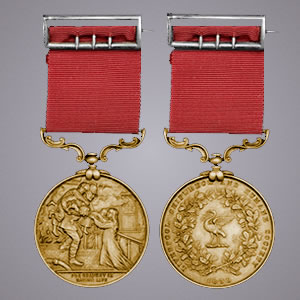
My own interest lies in the history and rewards of the society, it is a personal high point that whilst serving as chairman I was involved in the presentation of many medals and certificates, especially to serving members of the emergency forces. I have given several presentations of general and specific areas of interest to various interested parties over the years.
Is there an award/act of bravery that particularly stands out for you in the history of the Society?
I can say that there are several incidents that stand out. However I am always drawn to those involving young people and children. The bravery and sacrifice made with no thought of self is highly motivating and often deeply moving. I am constantly reminded that life-saving is a reaction that just happens, no pre-meditation no strategy just the perceived need to act on someone else’s behalf.
One specific rescue occurred a very long time ago. The Liverpool registered, Cunard Line, ss Batavia rescued the survivors of the Newcastle registered Charles Ward in mid-Atlantic during a heavy storm. Much was written about the event, but what is of interest is that among the passengers of the Batavia was Mark Twain, travelling as Samuel L Clemens, who sent a special dispatch to the New York Times reporting, with his insight, on the event. Research continues to uncover more of this rescue.
What do you think is an important focus for the future of LSHS?
Obviously we need to move with the times. The society was set up in a time when travel around the world was by sea. We travel with such ease now and the marine element is limited. We travel by vehicle and airplane, the horse is more used for pleasure than work now. We are trying to focus on ‘modern life’ and all the trials that come with that.